
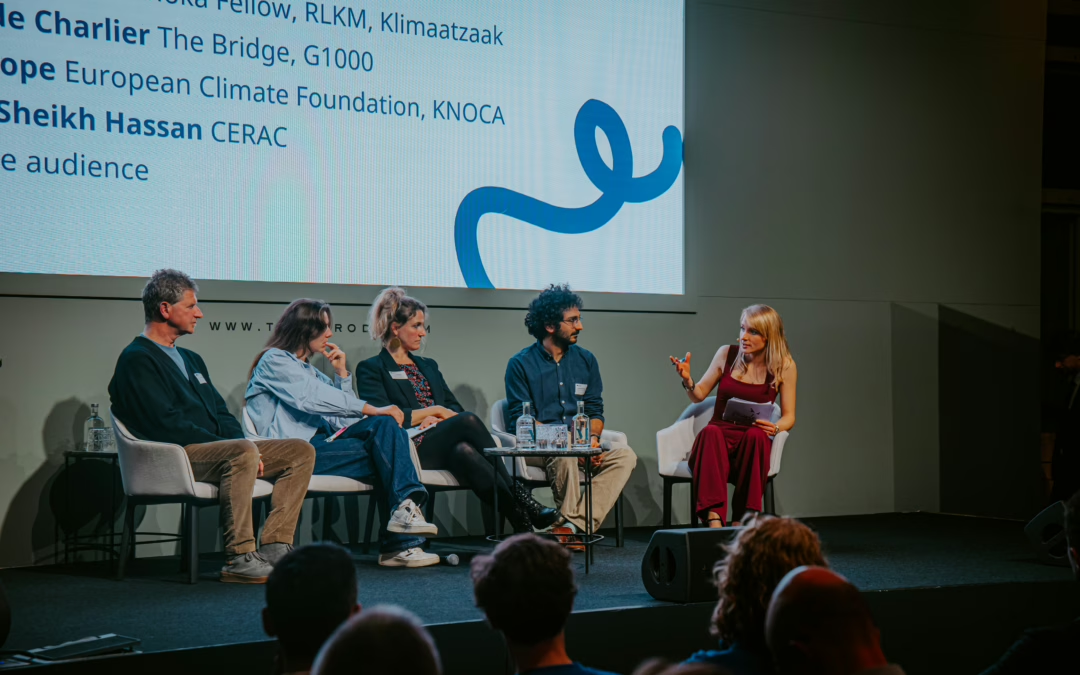
Panel discussions are a fixture of European conferences, EU institutional events, and policy summits. But too many of them fall flat: predictable questions, long monologues, and audiences that disengage after the first fifteen minutes.
The difference between a forgettable panel and one people are still talking about the next day? A skilled moderator.
In this guide, I share the exact preparation framework I use when moderating high-level discussions — from EU Commission events to international sustainability summits. Whether you’re moderating for the first time or looking to sharpen your skills, these steps will help you guide a panel that actually goes somewhere.
Why Panel Moderation Is a Skill, Not a Personality Trait
The most common misconception about moderation is that you need to be extroverted, charismatic, or a natural ‚performer‘ to do it well. That’s simply not true.
Some of the best moderators I know are thoughtful, quiet people who listen more than they speak. What makes them exceptional isn’t volume — it’s structure, preparation, and the ability to create space for others. A moderator’s job is not to be the star of the room. It’s to make everyone else shine.
Step 1: Get Deeply Familiar with the Topic
You are not the expert on stage, that’s what the panellists are for. But you need to understand the topic well enough to ask incisive questions, spot when something important is being glossed over, and redirect a conversation that’s gone off track.
Start with the basics: What is the current state of the debate? What does the research say? What are the fault lines, the genuinely contested questions where smart people disagree?
Then go deeper: What is your client hoping to achieve with this event? What does the audience want to take home? Understanding all three sets of expectations (organiser, audience, and panellists) is what I call the ‚triangle of purpose‘. Your job is to find the common thread.
Step 2: Research Your Panellists Thoroughly
Before any panel, I spend time getting to know each person on the podium. What are their areas of expertise? What positions have they taken publicly? Where might they clash and where might surprising common ground emerge?
This research isn’t just about avoiding awkward moments. It’s about unlocking the most interesting version of each person. The anecdote they’ve never been asked about. The tension between their public role and their personal conviction. The question that makes them lean forward.
Whenever possible, hold a brief pre-event conversation with each panellist. Let them talk. People are often more candid, more specific, and more interesting in a one-to-one call than on stage. Those conversations give you the raw material for questions that genuinely surprise — and the room notices.
Step 3: Build a Question Architecture, Not Just a Question List
There are two basic approaches to structuring a panel. You can move through panellists one by one, giving each person a dedicated block of time. Or you can move through topics, bringing in different voices on each question.
The second approach almost always produces a more dynamic conversation. It keeps everyone engaged: panellists can’t mentally switch off when they know any question might be directed at them. It also creates natural moments of dialogue and even productive disagreement.
Think in three acts: an opening that establishes stakes and context, a middle that digs into the complexity and tension, and a close that orients the audience toward what comes next. Within that structure, prepare more questions than you’ll need. You’ll sense in the room which threads are worth pulling.
I also always prepare opening and closing ‚balcony questions‘: questions that ask each panellist to step back from their expert position and speak more personally. ‚What does this mean for you?‘ or ‚What are three things you’d want this audience to do tomorrow?‘ These create memorable moments.
Step 4: Plan the Q&A Before It Happens
The audience Q&A is often the weakest part of a panel. Not because audiences have bad questions, but because it’s rarely well-managed. A few tips:
- Make clear early whether questions come at the end or during the panel.
- For large audiences, consider taking three questions at a time, then responding — it creates more dialogue and less of a classroom feel.
- In hybrid or digital settings, have a co-host managing the chat so you’re not splitting your attention.
- Be honest with yourself: many ‚questions‘ from the audience are actually statements in disguise. Your job is to gently surface the actual question or to acknowledge the statement and move on.
Step 5: Show Up with Presence, Curiosity, and a Plan You’re Willing to Abandon
All the preparation in the world means nothing if you’re too rigid to follow an unexpected thread. The best panels I’ve moderated have surprised me… a panellist said something that opened a door I hadn’t planned on walking through.
The preparation gives you the confidence to improvise. It means you’re never scrambling for the next question. It means you can listen (Really listen!!) to what’s being said, rather than scanning your notes for what comes next.
And when a conversation finds its own momentum? Get out of the way. Your job is done.
Ready to make your voice count?
Get your free guide now and start turning conversations into catalysts.
👉 Download your guide.
🧠 Step into your power.
🌍 Speak for the future.
What Makes Panel Moderation at EU and European Events Specific
Moderating in a European institutional context adds layers of complexity: multilingual rooms, power dynamics between member states, technical policy language, and audiences that range from civil servants to NGO representatives to elected officials.
This is the environment I work in most frequently: guiding discussions at the European Commission, European Parliament, and major EU-adjacent events. A few things matter especially here:
- Linguistic sensitivity: even in English-language panels, participants may not be speaking in their first or even second language. Pacing, clarity, and recapping what’s been said are acts of inclusion.
- Power awareness: in institutional settings, hierarchy is real. Some panellists will defer to seniority; others will fill every available silence. Part of your job is ensuring that the quieter, more junior, or less institutionally powerful voices get heard.
- Moving from talk to action: European policy events have a tendency toward abstraction. The best moderation consistently asks: ‚What does this mean in practice?‘ and ‚What would need to change for this to happen?‘
Ready to Take Your Moderation Skills Further?
If you’re a professional who moderates or speaks (or wants to) as part of your work, the Merle Academy offers tailored coaching programmes in Brussels and online. From a focused two-session Booster to a six-month Partnership, all programmes are designed for people working in complex, high-stakes spaces.
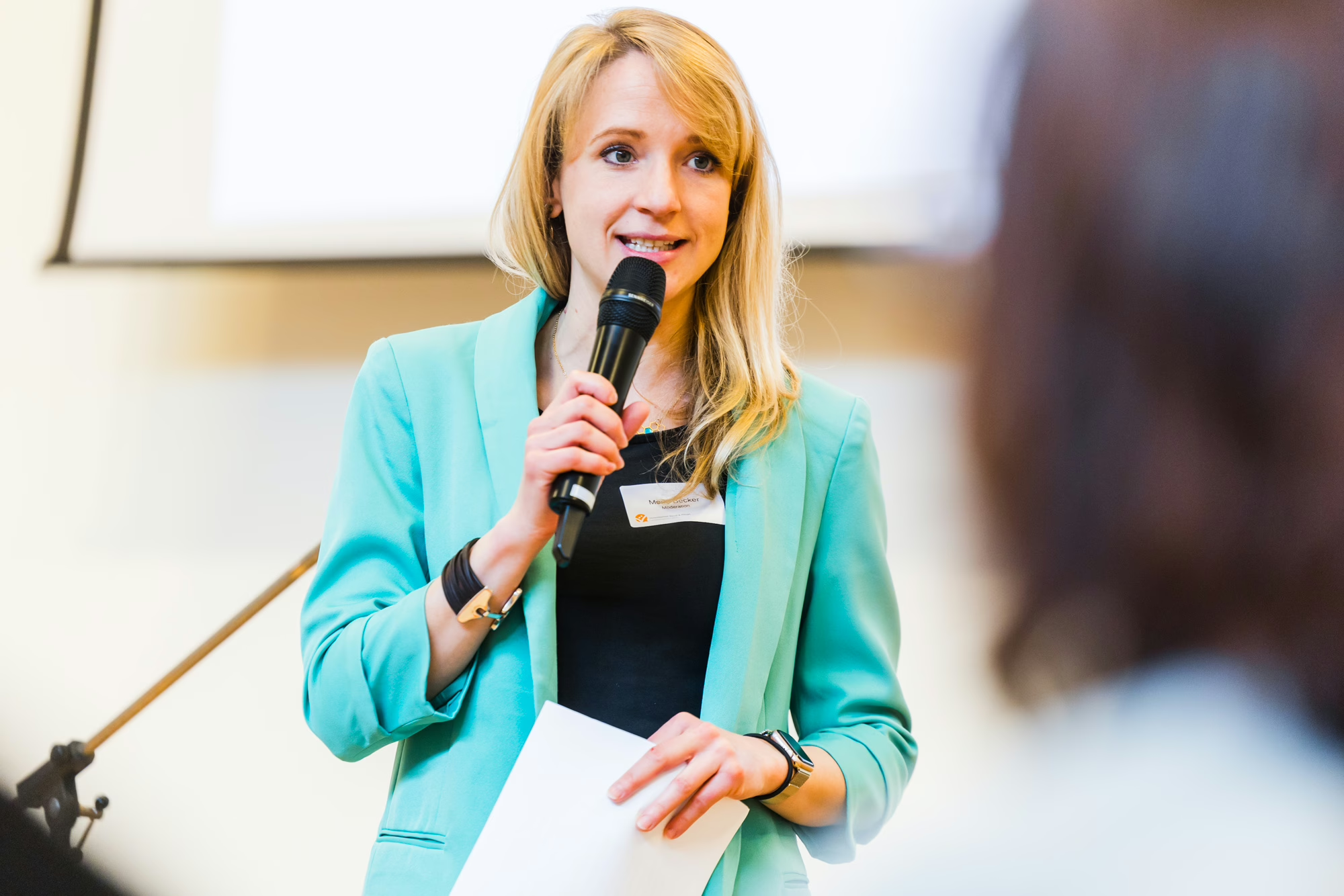
Merle Becker is a multilingual moderator and speaking coach based in Brussels. She moderates high-level events for EU institutions, international organisations, and European civil society — in German, English, and French.
She is the founder of Merle.Community, a Brussels-based speaker agency and coaching practice dedicated to impact-driven communication.